


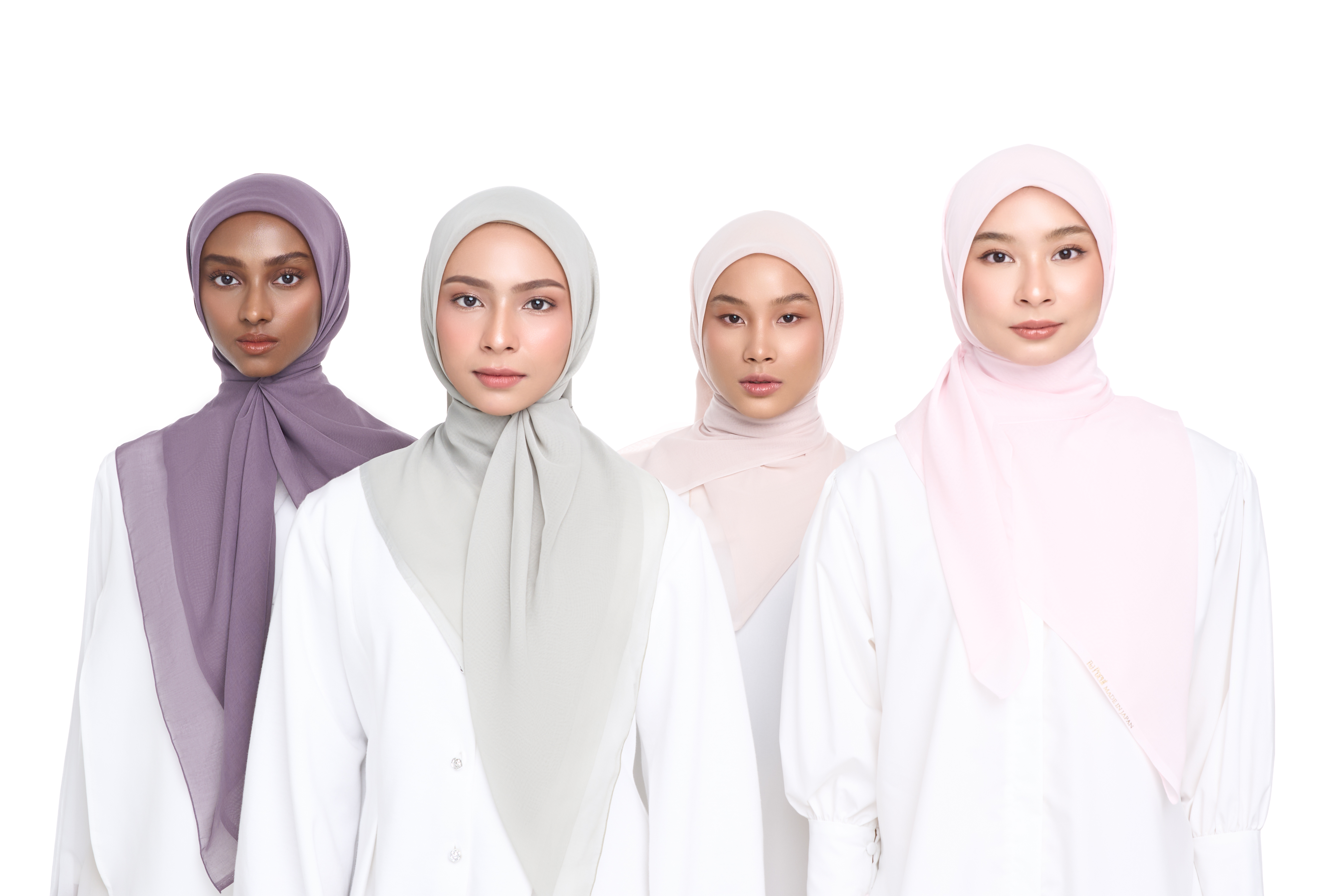
Hello, nicePeople! Do you ever feel like you're struggling when it comes to styling your hijab? You've looked at references everywhere, but the result on you always looks different, doesn't it? Maybe your face ends up looking wider, or the chin angle looks off. It feels like every trend doesn't suit your face.
Don't worry, you're not wrong! The key to hijab styling that makes us look effortlessly gorgeous isn't just about following trends. Actually, the fundamental secret lies in understanding our own face shape. Think of it as a natural contouring trick done with fabric.
When we know how to manage volume, drape, and the right face frame, any style will look good because our face is framed perfectly and proportionately. Let's break down this concise guide together!
Getting to Know Your Face Shape Better
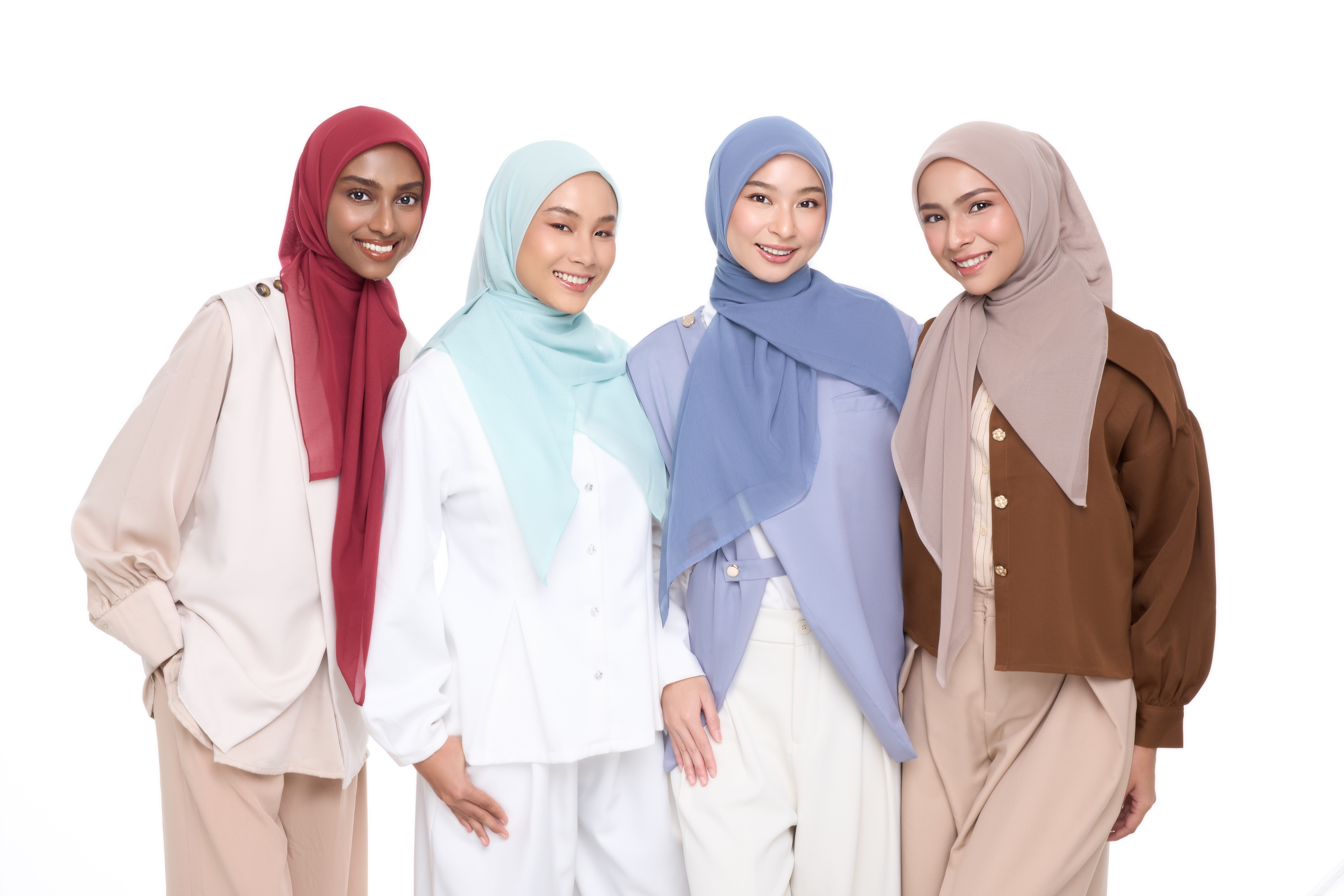
Observe your facial proportions carefully, starting from your forehead width, cheekbones, and jawline. Once you know your shape, choosing a hijab style becomes as easy as picking your favorite color. Here is a complete guide from napocut:
1. Round Face
Features: The length and width of the face are almost balanced, the contours of the cheeks and chin are very soft, with cheeks that tend to be full. Sharp lines (angles) are rarely visible.
Styling Strategy: Our goal is to create the illusion of elongation (vertical line) and provide dimension.
- Choose a V-Shape Line: Create a V-shape with the drape or folds of the hijab under the chin. This is an effective visual trick to "lengthen" the face.
- Face Frame Straight Down: Pull the hijab that frames your face (in the ear and cheek area) straight down; don't pull it too tightly behind your ears. This will avoid emphasizing full cheeks.
- Minimize Volume on the Sides: Avoid thick layers of fabric on the sides of the ears/cheeks. Flowy and lightweight materials are more recommended.
2. Oval Face (Universal Fit)
Features: The most balanced. The face length is slightly larger than the width, with a rounded forehead and a chin that isn't too pointy or boxy.
Styling Strategy: If this is your face shape, you are free to express yourself!
- Any Style, No Problem: An oval face suits almost any style, from a sleek turban, loose drapes, to models that cover the chest. Think of it as a blank canvas to play with.
- Focus on Facial Features: Because it is already proportional, you can experiment by highlighting other features; for example, leave the hijab frame slightly open to show off your cheekbones.
- Opportunity for Trial and Error: Use this advantage to try all the styles you like on social media without fear of them looking strange.
3. Square Face
Features: The forehead, cheekbones, and jaw width are almost the same, with a jaw that is very firm, strong, and angular.
Styling Strategy: The key is to soften the sharp angles, especially the jawline.
- Layering on the Sides: Create layers or drapes around the jaw and cheeks. Let the hijab fabric flow along the sides of the face, creating a rounded effect.
- Create Curves at the Chin: Pin your hijab a bit loosely under the chin, and try to have some folds covering the sharpest angles of your jaw.
- Volume: Add a little volume (using a cap or wrap) on top of the head to balance out the strong jawline.
4. Rectangle/Oblong Face
Features: The face looks long vertically, with straight sides from the forehead to the chin. Similar to a square, but the proportions are more elongated.
Styling Strategy: Focus on reducing length and adding horizontal width.
- Volume on the Sides: Direct the drape and volume of the hijab to the sides (in the cheek and ear area). This will give the illusion of horizontal width.
- Cover the Forehead Slightly: Pull the hijab frame to cover a small part of your forehead. This visual trick is effective in reducing the illusion of a long face.
- Avoid High Piles: Do not create hijab piles that are too high on top of the head because this will add to the illusion of a long face.
5. Heart Face
Features: The forehead is the widest part, with high cheekbones, tapering sharply to a narrow or pointed chin.
Styling Strategy: We need to balance it out by adding volume to the lower part and reducing focus on the forehead.
- Volume at the Chin and Lower Neck: Create drapes that are slightly full or have loose volume around the chin and neck. This will counterbalance the wide forehead.
- Cover the Sides of the Forehead (Temples): Pull the hijab frame to slightly cover the sides of the forehead (temple area) to reduce the impression of a wide forehead.
- Keep the Style Flat on Top: Do not create volume or piles on top of the head.
6. Inverted Triangle Face
Features: The forehead is the widest, then it narrows to the cheekbones and a pointed chin. The lines tend to be firmer than a heart-shaped face.
Styling Strategy: Similar to a heart-shaped face, focus on filling the gaps in the chin area.
- Low and Loose Side Volume: Add loose drapes and a little volume in the lower cheek and neck area. Let the hijab fall quite casually.
- Avoid Tight Wraps: Avoid styles that are pulled tight to the back, as that will further emphasize the narrow chin.
7. Diamond Face
Features: The cheekbones are the widest part (most prominent), with a narrow forehead and chin.
Styling Strategy: The key is to disguise the prominent cheekbones and add width to the forehead/chin.
- Loose Style at the Cheeks: Let the hijab fabric be loose on the sides, especially around the cheekbones and temples. This will camouflage the face contours.
- Accent on the Forehead: Try to have some drapes or folds near the forehead to provide the illusion of width.
- Avoid Styles that Cover Cheeks Tightly: Do not use styles that pull the fabric tight until it covers the cheekbones closely.
8. Triangle/Pear Face
Features: The jaw is the widest and firmest part, while the forehead is the narrowest.
Styling Strategy: The opposite of a heart-shaped face; we need to add the illusion of width to the forehead to balance out the jaw.
- Volume at the Forehead or Top of the Head: Create drapes or fabric folds on the forehead or slightly above the head. The goal is to make the forehead look wider and balanced with the jaw.
- Soften the Jaw: Let the hijab drapes fall freely around the neck and chest, moving away from tight wraps around the jawline.
The point is, nicePeople, hijab styling is about creating balance. Think of every fold as a contouring brush you use to make your face frame look its most charming.
It's Not Just Style; Color is Also a Secret for a Naturally Radiant Face
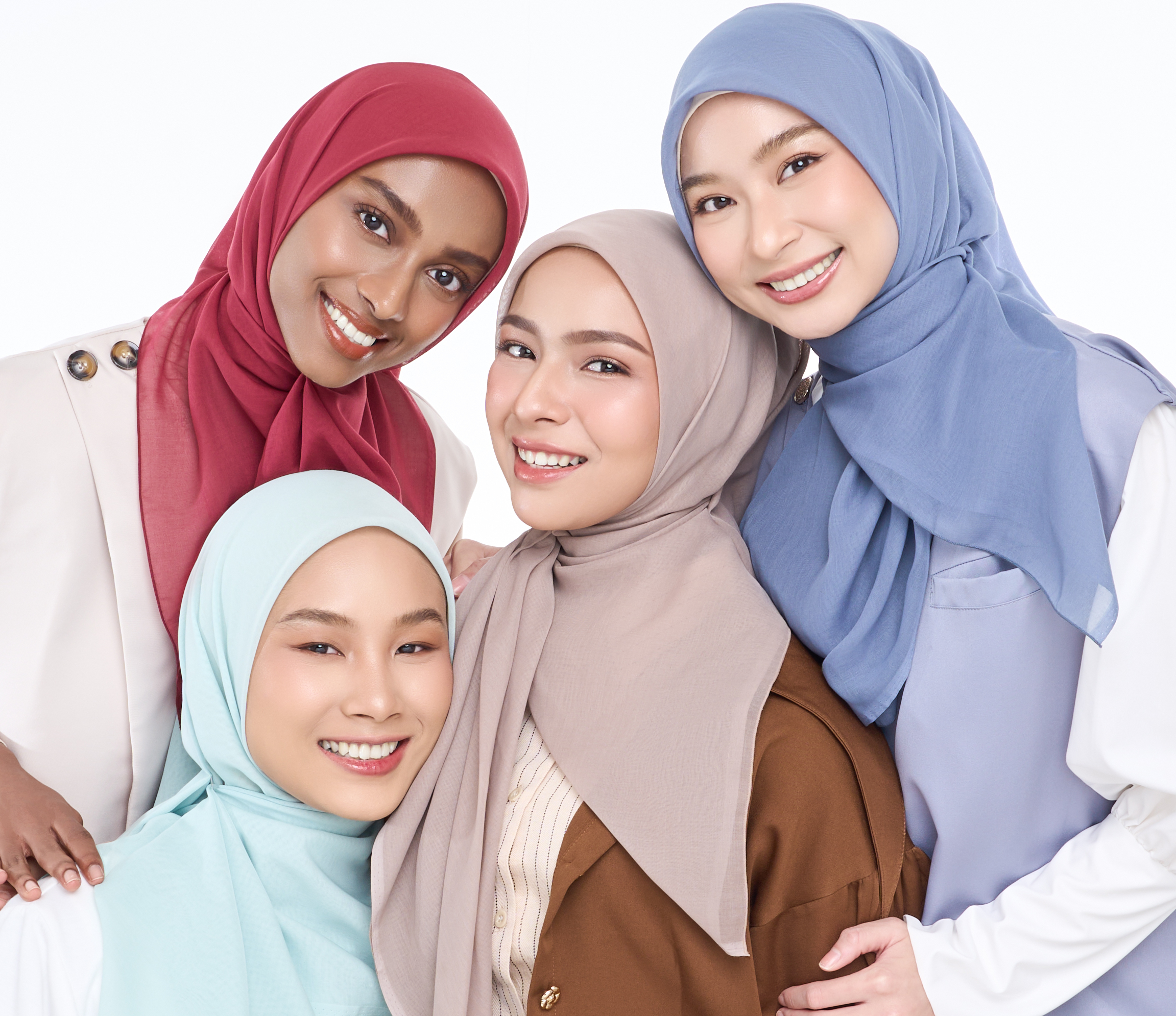
nicePeople, your hijab style is already perfect according to your face shape! But there's one more step that can take your appearance to the next level, which is choosing the right color. Because, no matter how good the styling is, if your hijab color clashes with your skin undertone, your face can look dull.
Perfect timing! napocut has just added new colors to its Plain Paris collection titled “The Beauty Of Diversity”, introducing over 50 stunning new color options. Why should you try it?
- Supports Your Hijab Styling: The napocut Plain Paris material is guaranteed to be easy to style however you need, from drapes for a square face to adding volume at the forehead for a pear-shaped face.
- Choose According to Your Undertone: Every color in “The Beauty Of Diversity” collection is specifically designed. You can easily choose colors that harmonize with your skin’s undertone (warm, cool, or neutral).
- Boost Your Confidence: When your hijab color clicks with your skin undertone, your face will automatically look fresher. This makes the face shape you’ve highlighted with your styling stand out even more, keeping you confident all day long.
Now that you know your best style, let’s complete it with colors that make your face glow naturally. The 50+ new colors of the Plain Paris collection are waiting for you to feel more confident!